
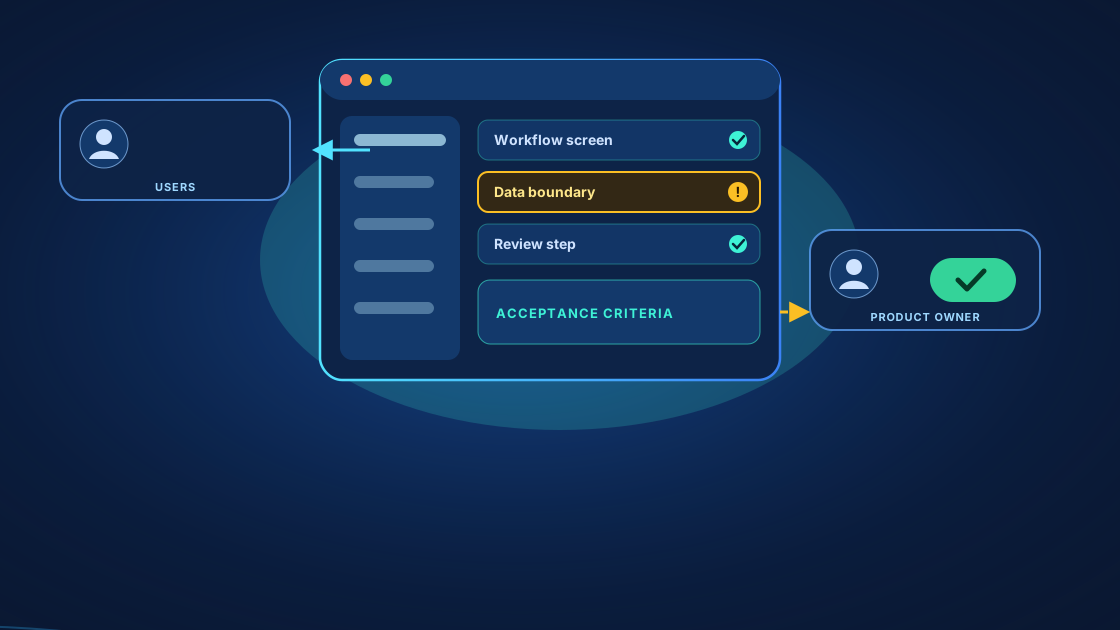
Define the users and decisions
Identify the tasks, roles, data inputs and decisions the application supports. Make important approvals and exception handling explicit in the proposed experience.
Plan new applications or modernise existing ones with clear users, data boundaries, review points and acceptance criteria. Start with the work and the people responsible for it.
Identify the tasks, roles, data inputs and decisions the application supports. Make important approvals and exception handling explicit in the proposed experience.
Choose a bounded workflow and identify dependencies, integrations and access needs. Agree what is included and what remains outside the first release.
Review the interface, data flow, security requirements and delivery approach with the relevant owners before implementation. Test representative paths and failure states.
Agree acceptance checks for the implemented scope, then define release ownership, operational documentation and maintenance responsibilities.
A workflow specification, interface and data-flow design, scoped implementation, acceptance evidence and handover documentation are deliverables to discuss. Compatibility and production commitments require an agreed scope.
Bring your current systems, the problem to solve and the people who will review the result. The team will confirm fit, dependencies and scope before committing to delivery.
These are engineering services, separate from the CloudSeals applications. For finance reconciliation see LedgerSight; for configured safety events see CompliSight; for carbon evidence see CarbonSight.
See the wider AI Cloud Engineering service for implementation and deployment support.