
Define expected behaviour
Describe intended tasks, users and operating limits. Identify what should happen when an input is incomplete, a recommendation is uncertain or an action is outside policy.
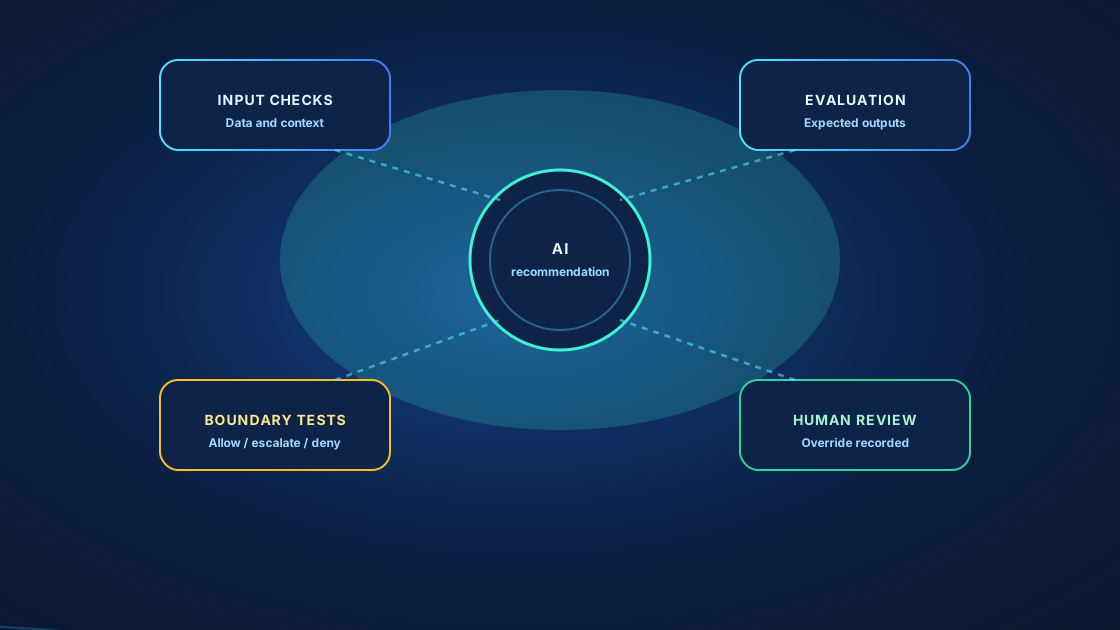
An AI-supported workflow needs checks for its inputs, recommendations, operating boundaries and human review. Discuss a quality-engineering scope that matches the system and its intended use.
Describe intended tasks, users and operating limits. Identify what should happen when an input is incomplete, a recommendation is uncertain or an action is outside policy.
Agree examples and failure scenarios that reflect the workflow. Avoid treating a few successful demonstrations as evidence that every use case is covered.
Exercise review gates, exception paths, fallback behaviour and access boundaries. Security testing or red-team activities need a defined scope and authorisation.
Record the system version, input set, test method, observed results and review decisions. Agree who decides whether a change is ready for release.
An evaluation plan, agreed test scenarios, observed findings and a prioritised remediation backlog can support a release decision. Testing does not itself establish regulatory compliance or certification.
Bring your current systems, the problem to solve and the people who will review the result. The team will confirm fit, dependencies and scope before committing to delivery.
These are engineering services, separate from the CloudSeals applications. For finance reconciliation see LedgerSight; for configured safety events see CompliSight; for carbon evidence see CarbonSight.
See the wider AI Cloud Engineering service for implementation and deployment support.