
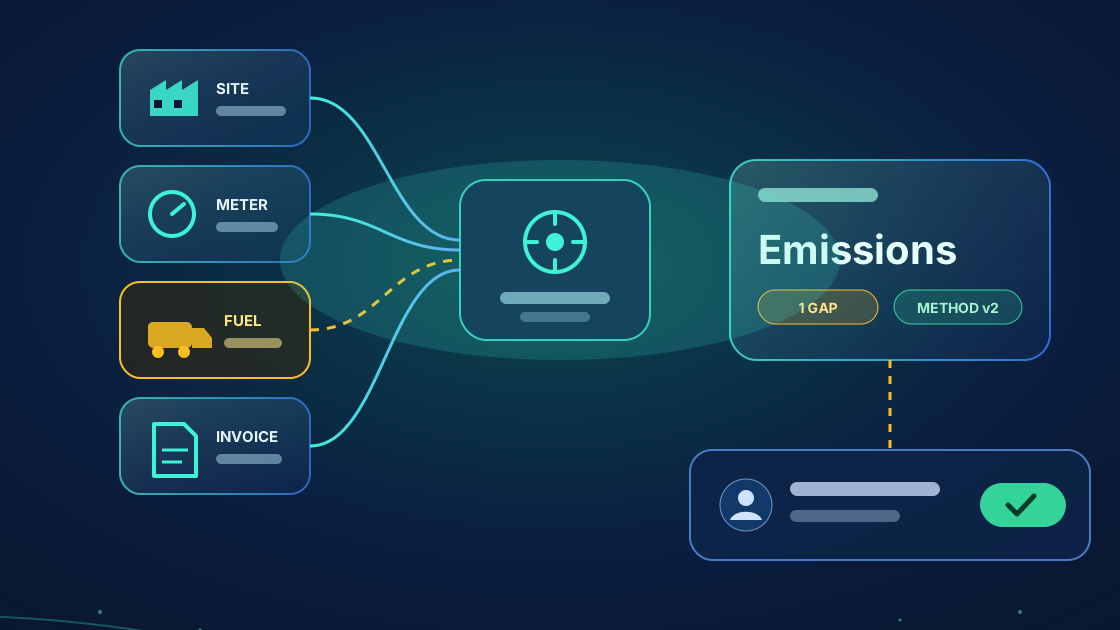
Many data owners
Sites, meters, fuel cards and invoices arrive in different formats and on different timetables.
Carbon MRV for reporting teams. CarbonSight keeps the origin of every input, applies the approved method, turns gaps into exceptions and records who approved each figure, so your assurer can follow it back to source.
Illustration. Data sources and evidence export formats are confirmed during scoping.
Traceable sourcesOperational and sustainability data keeps its origin.
Methods on the recordThe approved method and version are part of the record, not an assumption.
Evidence for assuranceSource, method, exceptions and approvals in an exportable record.
Carbon data comes from many owners and systems, and it is reviewed by people who are paid to be sceptical.
When an assurer asks where a figure came from, which method was used and who approved an estimate, the answer should not depend on one person’s spreadsheet.
Sites, meters, fuel cards and invoices arrive in different formats and on different timetables.
Missing or inconsistent inputs get quietly filled in instead of reviewed.
Which calculation method and version produced a figure is assumed, not recorded.
The review package takes weeks to assemble when evidence lives in separate places.
CarbonSight is generally available. It organises the MRV workflow; the assurance opinion always comes from your assurer.
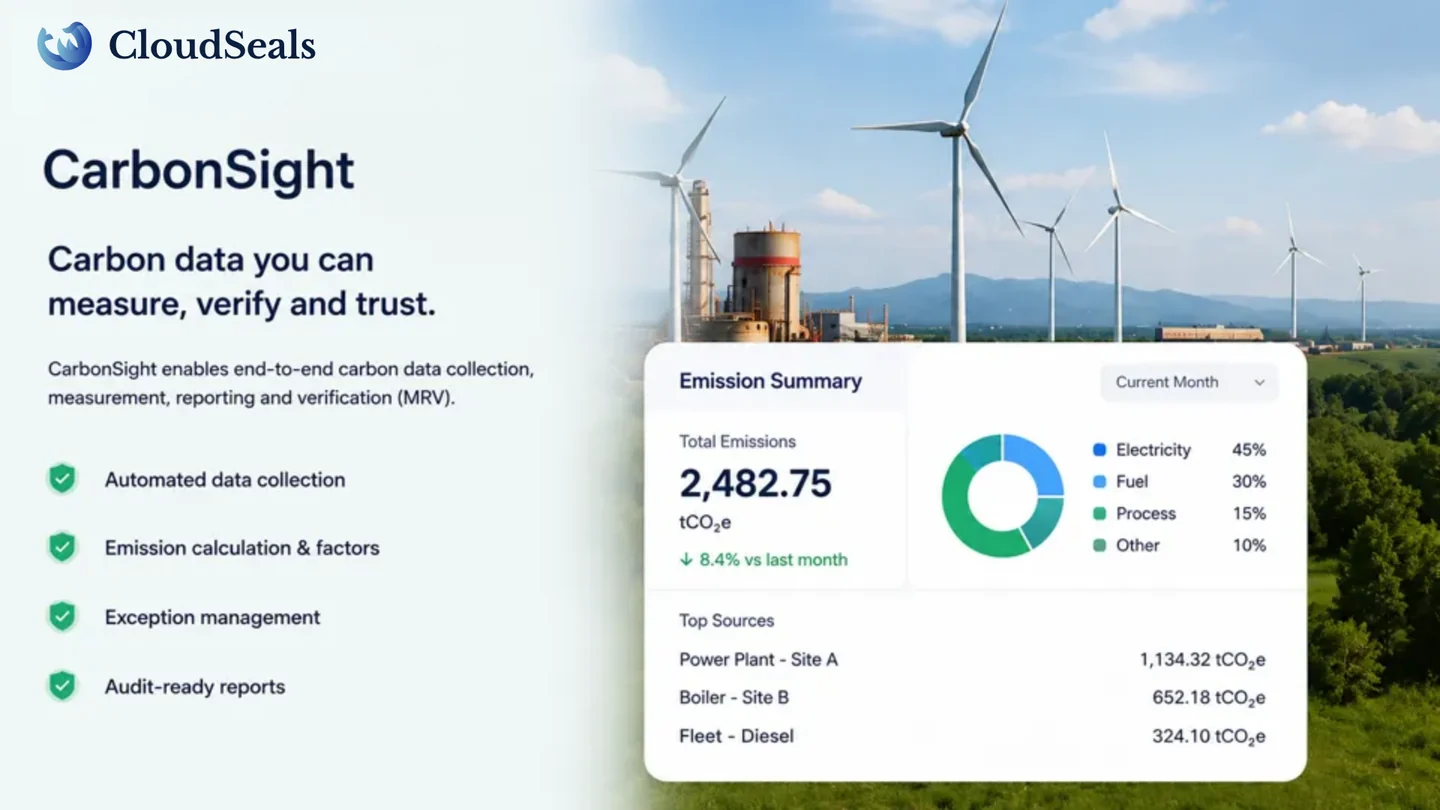
Organises source data, calculation, methodology, review, exceptions and evidence into a traceable MRV workflow.
CarbonSight prepares the evidence. It does not certify your figures.
The approval boundary before a figure is final and the record behind it afterwards.
Each area needs different source context. Your reporting and assurance teams decide what is in scope.
Bring meter readings, utility invoices and fuel records in with their origin kept, so every activity figure traces back to where it came from.
Supplier and spend data come from owners outside your organisation, which makes provenance and review harder to show. Which Scope 3 categories are in scope is your reporting team’s decision.
Apply the approved calculation method to the source data. The method and its version are part of the record, so a later reviewer can see exactly how a figure was produced.
Export source context, method, exceptions, approvals and final results for your assurer and reporting. The assurance opinion is given by your assurer, not by CarbonSight.
Six steps. Where data is missing, that is an exception for a person to review, not an estimate made quietly.
Operational and sustainability data arrives with its origin kept.
The method and version are recorded with the result.
Missing or inconsistent data becomes an exception to review.
TrustOps: no silent gap-filling.
The reporting team approves the figure within the policy boundary.
TrustOps: named approver recorded.
Source, method, review, exceptions and approvals go to Evidence Fabric.
Evidence is exported for your assurer and reporting.
Your assurer gives the opinion.
A synthetic reporting case. CarbonSight surfaces the gap instead of filling it; the policy decides who may approve an estimate.
Data gap6 days
Illustrative values. No emission factor or reported figure is implied.
Source file, period coverage and the missing days stay attached to the figure.
Any proposed estimate goes to the named reporting approver with its basis.
A figure cannot be finalised with an unreviewed gap or an unrecorded method change.
Source, method version, exception, approver, decision and final figure.
Own the source data, the approved methods and the review of exceptions before reporting.
Provide meter, fuel, invoice and supplier inputs with clear ownership and provenance.
Follow a figure back to its source, method and approval in an exported evidence record.
Every figure that leaves the team passes through the boundary you agree. These are example policies for a reporting engagement, not a deployed rulebook.
Only the data sources and owners agreed for the reporting scope feed the calculation.
A proposed estimate for missing data goes to the named approver with its basis attached.
Unreviewed gaps and unrecorded method changes cannot reach a final figure.
Evidence fields and export formats are agreed with your reporting and assurance teams. How TrustOps works · Evidence Fabric
Start with one reporting area and its source data. Sources, methods, export format and success criteria are confirmed during scoping; pricing is discussed privately.
Choose the reporting area, data owners, approved methods and reviewers.
Connect sample source data with provenance and agree the exception rules.
Work through exceptions and approvals, and test the evidence export.
Confirm the export is useful for review and decide the next step.
The reporting area where source data is hardest to trace back today. The scope is agreed with your reporting and assurance teams during scoping.
A named reporting approver agreed for the scope. The estimate, its basis and the approver are recorded with the figure.
An evidence export with source context, method and version, exceptions, approvals and final results, in a format agreed with your reporting and assurance teams.
The method and its version are part of the record, so a later reviewer can see which version produced each figure. Changes follow the approval boundary you agree.
Yes. CarbonSight is generally available. Data sources and evidence export formats are confirmed during scoping.
CarbonSight product overview · Sustainability and carbon · Security review · Evidence standards
Discuss source data, methods, exception handling and what your assurer needs to examine.