
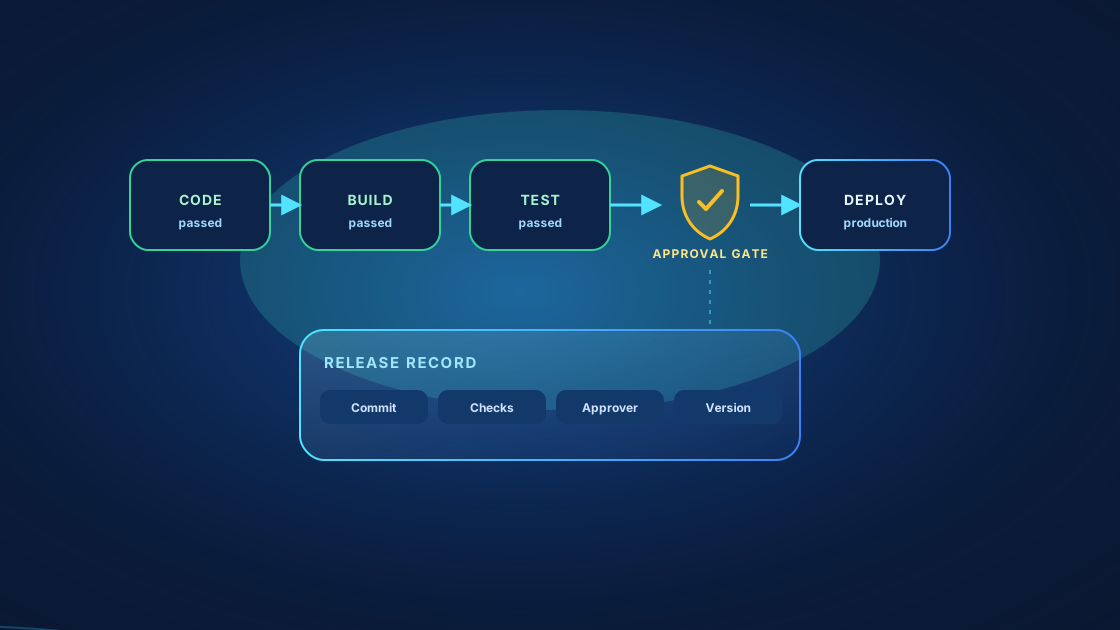
Understand the release path
Map source changes, builds, tests, environments, approvals and production access. Identify where manual steps or unclear ownership make a release difficult to repeat.
Discuss the delivery workflow around your application or AI-assisted system: environments, build and release checks, approval gates, deployment visibility and operational ownership.
Map source changes, builds, tests, environments, approvals and production access. Identify where manual steps or unclear ownership make a release difficult to repeat.
Agree which changes require review, what tests must pass and who may approve a release. Include credentials, configuration and dependency handling in the design.
Start with an agreed workflow and exercise it in a suitable environment. Define rollback conditions and retain the release context reviewers need.
Discuss logs, alerts, incidents and the evidence needed to investigate a change. For model workflows, agree validation and monitoring requirements explicitly rather than assuming they are included.
A delivery assessment, proposed pipeline changes, environment and access requirements, release checks and operational documentation can form the engagement outputs. Tools and support responsibilities are agreed during scoping.
Bring your current systems, the problem to solve and the people who will review the result. The team will confirm fit, dependencies and scope before committing to delivery.
These are engineering services, separate from the CloudSeals applications. For finance reconciliation see LedgerSight; for configured safety events see CompliSight; for carbon evidence see CarbonSight.
See the wider AI Cloud Engineering service for implementation and deployment support.