
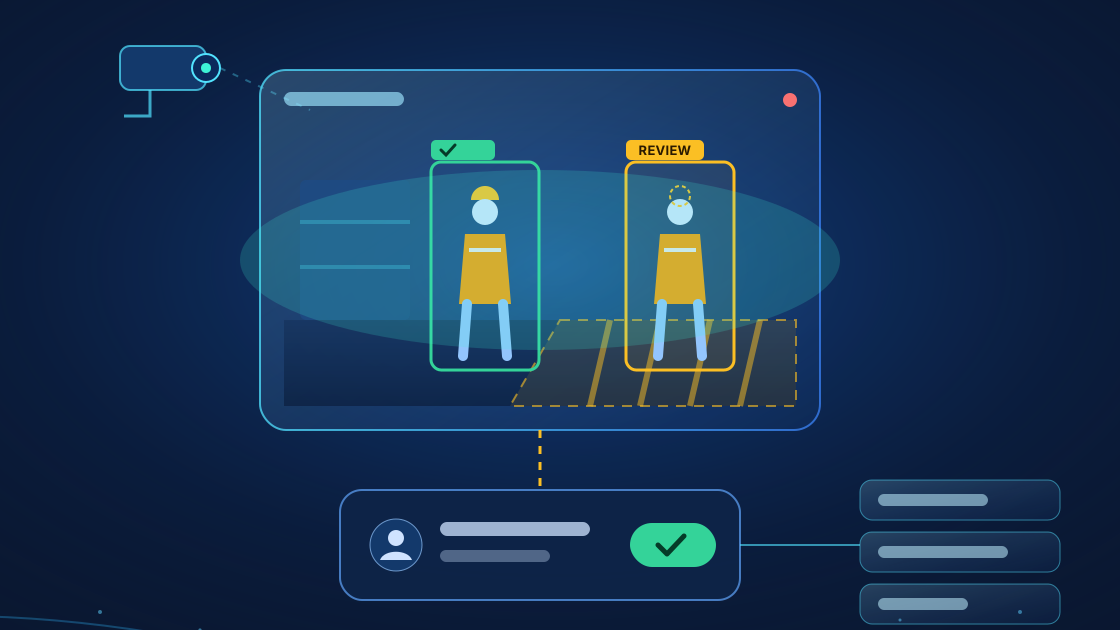
Too many screens
Supervisors cover several zones and shifts with no time to watch every feed.
PPE and site-safety review from the CCTV you already have. CompliSight flags configured events, a supervisor checks the context and decides, and detection, review, action and closure stay connected.
Illustration. Camera feeds, configured rules and retention are confirmed during scoping.
Approved feeds onlyIt analyses the CCTV feeds you have approved, already in place.
Narrow, configured rulesPPE and site-safety rules agreed for each zone, nothing broader.
Evidence that stays connectedDetection, review, corrective action and closure in one record.
PPE exceptions and hazards happen across shifts and zones, and supervisors cannot watch every screen.
When an auditor or investigator asks what was seen, who looked at it and what was done, the answer is often spread across footage, radios and spreadsheets.
Supervisors cover several zones and shifts with no time to watch every feed.
A missing hard hat or a person in a restricted zone is noticed late, or not at all.
Corrective actions are agreed verbally and closure is hard to show later.
The record of detection, review and closure lives in separate places.
CompliSight is generally available. It works from approved CCTV feeds already in place; camera and video-management compatibility is confirmed during scoping.
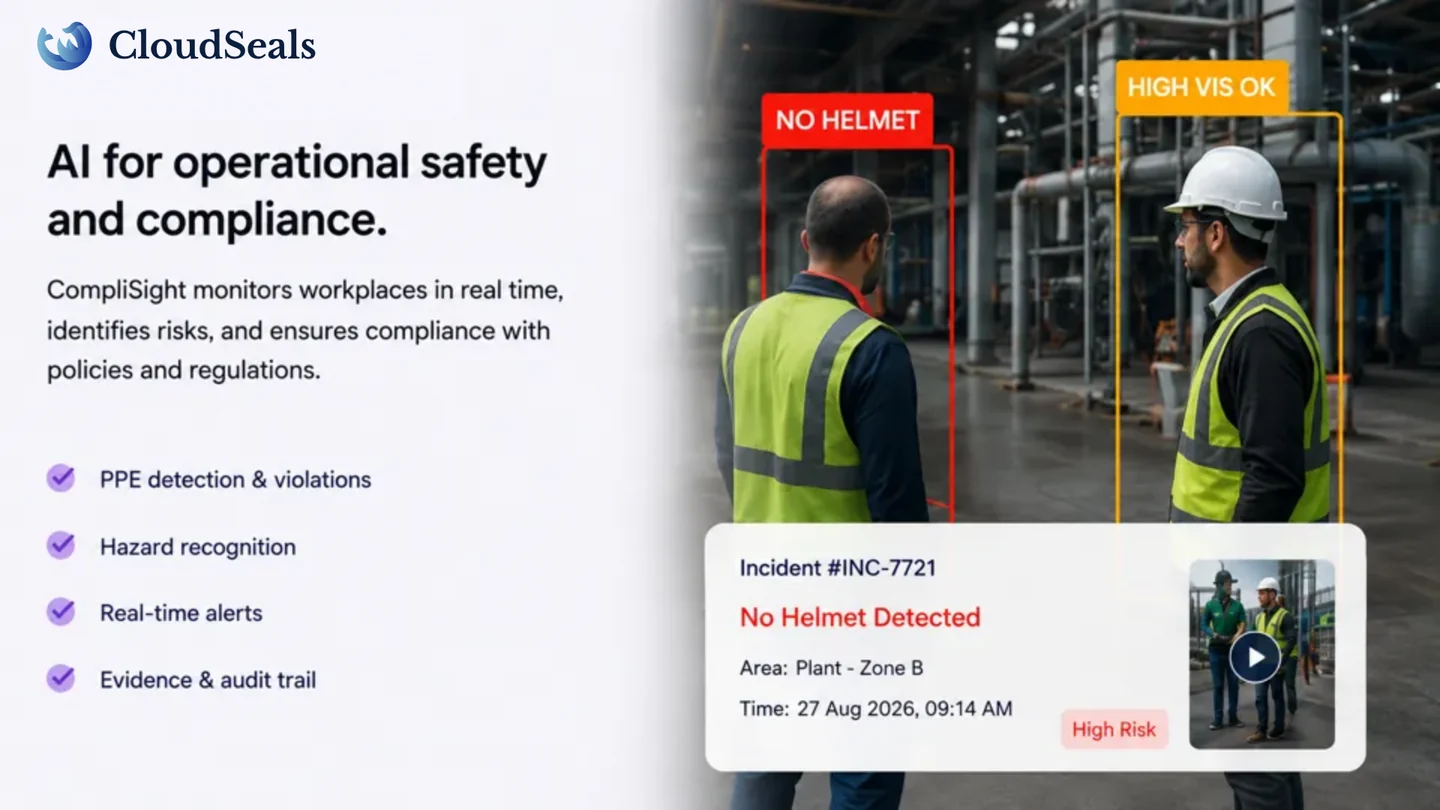
Analyses approved CCTV feeds for configured PPE and site-safety rules and keeps the evidence of each alert.
A person checks the visual context and decides. Safety responsibility stays with your team.
The configured boundary before an alert and the retained record afterwards.
Rules are narrow and agreed for each zone. Choose one to begin; the others follow the same review and evidence pattern.
Flag configured PPE conditions, such as a hard hat or high-visibility vest required in a marked area, for supervisor review.
Surface entries into agreed zones, such as loading bays or machine areas, so a supervisor can check whether the entry was authorised.
Configure site-safety conditions agreed for the site and route them to the responsible team with the visual context attached.
Record the response, the corrective action and the closure, so reporting draws on what was actually reviewed and decided.
Five steps. AI supports the decision; people keep safety responsibility.
Existing CCTV with agreed camera context and zones.
Narrow PPE and site-safety rules flag a possible exception.
TrustOps: configured rules only.
The visual context is checked against the agreed site procedure.
TrustOps: a person decides.
The responsible person records the corrective action and follow-up.
Detection, review, action and closure stay connected for inspection.
Evidence Fabric: the retained record.
A synthetic safety event. CompliSight flags the configured condition; the supervisor decides what happens next.
Possible PPE exceptionReview
Illustrative values. Severity labels are operational and do not indicate EU AI Act classification.
Camera, zone, rule and visual context stay attached to the alert.
The supervisor on shift reviews the context and decides the response.
No emotion or intent inference, and no automatic action against a person.
Detection, reviewer, decision, corrective action and closure.
Review configured alerts in context, decide the response and close them with a record.
See open events, corrective actions and closure across zones and shifts.
Inspect what was seen, who looked at it and what was decided, after the fact.
Being clear about the boundary matters more in safety than anywhere else. These are example policies for a site deployment, not a deployed rulebook.
Only the CCTV feeds and zones approved for the deployment are analysed against the configured rules.
A flagged event goes to the responsible supervisor with the visual context attached.
No emotion or intent inference, and an alert is never closed without a person.
Identification handling, masking or blurring, where video is processed, access and retention are confirmed per deployment. Customers remain responsible for legal, privacy and worker-representation assessments. EU AI Act guidance · Security review
Start with agreed camera feeds and a narrow rule set in one area. Feeds, rules, retention and success criteria are confirmed during scoping; pricing is discussed privately.
Choose the site area, approved feeds, configured rules and the supervisors who will review.
Confirm privacy, masking, access, retention and worker-representation requirements for the site.
Evaluate alert usefulness, the review flow and the evidence with your safety team.
Check the agreed criteria and whether more zones or sites fit.
Start with one area where a missed PPE or zone exception matters most, such as a loading bay or machine area. Approved feeds and a narrow rule set for that area are agreed during scoping.
The supervisor responsible for that zone and shift, agreed during scoping. Every alert is reviewed and closed by a person, and that review is part of the record.
Retention is configured per deployment. Your organisation decides how long visual context and records are kept, based on its own legal and privacy assessment.
Privacy, identification handling, masking or blurring, where video is processed, access and worker-representation requirements for the site. See the EU AI Act guidance and the security review.
Yes. CompliSight is generally available. Feeds, configured rules and evidence retention are confirmed during scoping.
CompliSight product overview · Industrial and manufacturing · Security review · Workflow examples
Tell us the site area, the cameras already approved and who supervises each shift. We will scope a narrow rule set and the record you need after every alert.